Thursday, December 15, 2011

Barotrauma Basics

The arrow is pointing to an
inflated swim bladder
Many marine reef fish have a unique organ called a swimbladder. The gas-filled sac, which is attached to a fish's backbone beneath the dorsal fin, helps control buoyancy and allows the fish to maintain various depths in the water column. When a fish is brought up from depth during fishing, the decreasing pressure can cause the gases (mostly oxygen, nitrogen, and carbon dioxide) inside it's swimbladder to expand and rupture the organ. The escaped gases will continue to expand into the fish's body cavity, and the pressure exerted by them is sufficient to push the stomach out the mouth and the intestines out of the anus. Other symptoms may include a swollen belly or buldging eyes.


A grouper showing the signs of
barotrauma
This process, known as barotrauma, can result in serious injury to the fish and prevent if from returning back down to depth on its own if left in this state. Fish released in this condition may float away and die from exposure to the elements or become an easy target for predators.
Dealing with barotrauma has become as major challenge to fisheries managers. Allowing fish to simply float off after being released defeats the purpose of having regulations for minimum size restrictions and bag limits.
Several tools have been developed by researchers and fishermen to help address the issue of barotrauma.Venting involves inserting a hollow, sharpened needle into the side of a fish to release trapped gases so the fish is able to quickly return to a safe depth. Recompression involves returning a bloated fish to a safe depth with the aid of a cage, basket, or weighted hook or lip device.
Neither method is full proof or applicable in all conditions (or for all fish), but research studies have shown that when used in the right conditions venting and recompression can play an important role in  reducing mortality rates associated with fish suffering from barotrauma.
Stay tuned to learn more about these efforts as there are several initiatives at the local, state, regional, and national level to investigate the continued use of the conservation tools. In the meantime if you'd like to learn more about venting and recompression visit: catchandrelease.org

venting a red grouper


Returning a red grouper with a recompression device

Sunday, December 11, 2011

FAO/ WHO Report of the Risks and Benefits of Fish Consumption Available

Interested in learning more about the relative health benefits and risks associated with eating seafood?
Recently a report by the Joint Food and Agriculture Organization (FAO) and the World Health Organization (WHO) Expert Consultation on the Risks and Benefits of Fish Consumption was published that provides a framework for assessing the net health benefits or risks of fish consumption. While the report itself it too long to share, below is a summary of what the report's expert panel concluded.

1. Consumption of fish provides energy, protein and a range of other important nutrients, including the long-chain n-3 polyunsaturated fatty acids (LCn3PUFAs).

2. Eating fish is part of the cultural traditions of many peoples. In some populations, fish is a major source of food and essential nutrients.
 
3. Among the general adult population, consumption of fish, particularly fatty fish, lowers the risk of mortality from coronary heart disease. There is an absence of probable or convincing evidence of risk of coronary heart disease associated with methylmercury. Potential cancer risks associated with dioxins are well below established coronary heart disease benefits from fish consumption.

4. When comparing the benefits of LCn3PUFAs with the risks of methylmercury among women of childbearing age, maternal fish consumption lowers the risk of suboptimal neurodevelopment in their offspring compared with the offspring of women not eating fish in most circumstances evaluated.

5. At levels of maternal exposure to dioxins (from fish and other dietary sources) that do not exceed the provisional tolerable monthly intake (PTMI) of 70 pg/kg body weight established by JECFA (for PCDDs, PCDFs and coplanar PCBs), neurodevelopmental risk for the fetus is negligible. At levels of maternal exposure to dioxins (from fish and other dietary sources) that exceed the PTMI, neurodevelopmental risk for the fetus may no longer be negligible.

6. Among infants, young children and adolescents, the available data are currently insufficient to derive a quantitative framework of the health risks and health benefits of eating fish. However, healthy dietary patterns that include fish consumption and are established early in life influence dietary habits and health during adult life.

To view the entire report visit:

Monday, December 5, 2011

Exploring the flats at low tide

Seagrass and mudflat communities at low tide are an excellent opportunity for curious onlookers to explore and see up close the myriad of coastal life these dynamic environments can support. In particular, these environments harbor a high diversity of invertebrates (animals lacking backbones) from egg sack-producing  worms to predatory snails hunting in the mud for a snack. For those who aren't afraid to get a little wet and muddy, they won't be disappointed at what they can find. I thought I'd "wet" your appetite by starting you off with a quiz of some of the invertebrates you might discover in these communities. Good luck! (I've provided you with some clues to help name them.) Answers are on the bottom.

1. Hint: this is nether an equine's support apparatus nor a true crustacean as the name implies.

2. Hint: Perhaps not a pretty as the flower that shares its name, but cool nonetheless.

3. Hint: check out its royal head gear.
4. Hint: No spinning webs for this crustacean.

5. Hint: Don't let the electrifying streaks in the sky prevent you from naming this one.

6. Hint: Count the arms to help you with its name.

7. Hint. Think "fragile celestial body"

8. Hint: The mollusk has within its name, another word for swine.


ANSWERS
  1. Horseshoe Crab
  2. True Tulip Snail
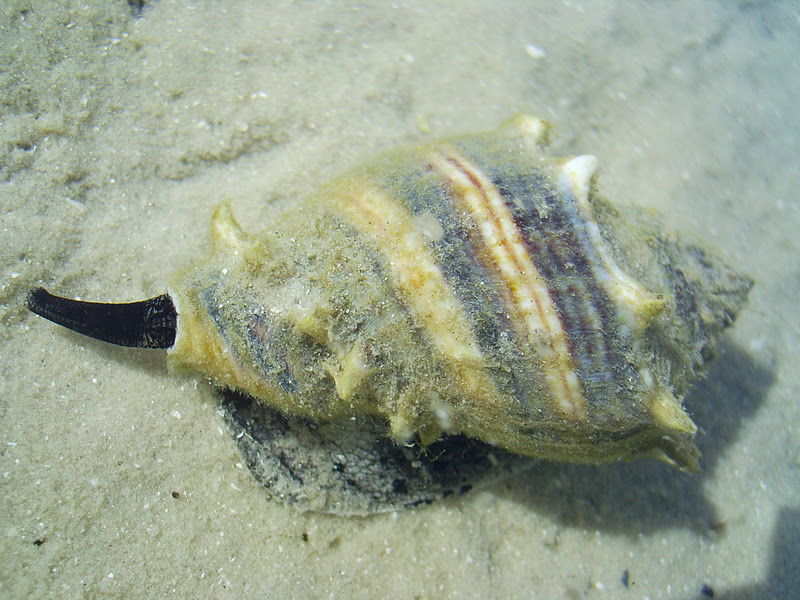
  3. Crown Conch
  4. Spider Crab
  5. Lightning whelk
  6. 9-armed sea star
  7. Banded Brittle Star
  8. Quahog Clam

If you would like to learn more about these animals  and  other marine life that inhabit Florida's coastal waters, consider taking the Florida Master Natural Program Coastal Module. Details and Schedules and can found at: http://www.masternaturalist.ifas.ufl.edu/

Monday, November 28, 2011

Do You Know the Status of Red Tide in Your Area?

Recently there have been  reports of red tide events occuring near and offshore of Lee and Collier Counties. In Florida, a "red tide" generally refers to a bloom or rapid increase in the concentration of Karenia brevis cells, which is a marine algae species (specifically a dinoflagellate) commonly found in the Gulf of Mexico. K. brevis cells release a toxin that, in high concentrations, can be harmful to many types of marine life, and often result in  fish kills.
While red tide events naturally occur in the region, it is important for residents and visitors to stay informed about the status of theses episodes as they can have negative impacts on human health, local fisheries, and the coastal economy in general.
Fortunately, the FWC-Florida Fish and Wildlife Research Institute publishes a "Red Tide Current Status" page that provides a summary report of current red tide conditions around Florida. The site also includes a map of sampling results and regional status reports. You can sign up for weekly email updates via FWC's listserv by visiting: http://myfwc.com/research/about/information/subscription/ and following the directions. Reports are generally updated on Friday afternoon (except during holiday, in which case the report will be released on the closest day), and additional information, if available, is provided on Wednesday afternoons.

Tuesday, November 22, 2011

The Marine Scene Plus!

I'm pleased to announce a new resource for those of you who are interested in keeping up with marine events in Southwest Florida-The Marine Scene Plus. This new blog is a joint effort between Sea Grant Extension Agents, Libby Carnahan, John Stevely, Betty Staugler, Joy Hazell, and myself Bryan Fluech, The Blog is full of current marine-related events, program announcements, and interesting articles to make you a more informed coastal citizen. Besides following the blog, you can also elect to sign up for the Marine Scene eNewsletter that is published six times a year. Enjoy!


All entries are archived and searchable,
which makes it easier for your to find
 what you are looking for!

Thursday, November 17, 2011

Red Grouper Bag Limit Increased; Gag Closure Lengthened

First the good news. Since November 2nd 2011, Gulf of Mexico fishermen targeting red grouper in federal waters are able to bring home more of these highly sought-after reef fish. In November NOAA Fisheries Service announced a final rule that increased the Gulf of Mexico red grouper bag limit from two to four fish in the four-fish grouper aggregate bag limit. According to the latest stock assessments red grouper are neither overfished or experiencing overfishing.  In recent years, the recreational sector has not caught its allocation of red grouper, and the Gulf of Mexico Fishery Management Council, the agency responsible for establishing management plans in federal waters, voted back in August to relax its recreational red grouper regulations. The increase in bag limit will allow the recreational sector the opportunity to harvest its allocation of red grouper, which was increased from 1.36 million pounds to 1.65 million pounds for 2011.
The Florida Fish and Wildlife Conservation Commission also adopted similar measures for red grouper at their November meeting to be consistent with the federal rules. For Gulf of Mexico state waters (excluding Monroe County), the increase in bag limit  will take effect Dec. 23, 2011.


Keep in mind, however, that if the recreational sector does exceed their new catch limit in a given year, required accountability measures would go into place that would decrease the red grouper bag limit from four fish to three fish for the following fishing season. If the annual catch limit is exceeded again the following year, the bag limit would drop to the current bag limit, which is two fish. Fortunately, managers do not anticipate the recreational sector exceeding these limits unless its fishing effort drastically increases.
On the other hand, gag grouper is still considered overfished and undergoing overfishing, which by law, means managers must take action to rebuild its stocks to healthy levels and end overfishing. As part of a 10-year gag rebuilding plan managers are proposing to adjust the recreational and commercial sector's annual catch limits for gag grouper and set the Gulf of Mexico recreational gag fishing season from July 1through October 31 each year starting in 2012.

The 123-day season was chosen to allow for the longest possible season without exceeding annual catch targets and meet the gag grouper rebuilding plan. The rebuilding plan also has accountability measures in place that would shorten the length of this fishing season if catch limits are exceeded. The recreational bag limit of two gag grouper within the grouper aggregate and the minimum size limit of 22 inches total length would remain the same. To learn more about gag grouper management measures visit: http://myfwc.com/media/1603482/FB11-094_Temporary-GagGrouper-Rule.pdf

Thursday, November 10, 2011

Congrats to our Newest Florida Master Naturalist Graduates

Today my colleague Joy Hazell and I held our final class of our Florida Master Naturalist Program (FMNP)-Conservation Science Module, and I'm proud to say we now have 14 new graduates to the program! I want to congratulate the class for their accomplishment. They were a great group and I enjoyed getting to know them.
This course is designed to educate people in the concepts, language, and science related to conservation needs, planning, and action. Concepts addressed during the course included species diversity, measuring biodiversity, the processes that generate and maintain biodiversity, types of ecosystem services, ecological processes, habitat fragmentation, effects of human activities on ecosystems, the history of conservation in North America, and strategies for conservation planning.

We were fortunate to have Dr. Marty Main, the FMNP creator and coordinator to be our guest lecturer today. He gave a great presentation on Conservation Strategies for Sustainable Ecosystems.. He also came along with us on our field trip to Pepper Ranch Preserve, which is an absolutely beautiful property managed by Collier County's Conservation Collier Program. Christal Segura, who is an Environmental Specialist with the program gave us a great tour of the property. It was a beautiful day, and an excellent way to finish the class.
Again, congratulations to our new graduates!!! Enjoy the pictures.

A 2-minute presentation on the biodiversity of lichens found on a single branch
An awesome explanation of how habitat fragmentation can negatively affect genetic diversity

FMNP students participate in a role play activity where they serve as an advisory committee who must come to consensus about the acquisition of conservation lands in a fictitious county.

Guest lecturer Dr. Marty Main, and his characteristic machete.
Christal Segura, Environmental Specialist with Conservation Collier provides the class with an overview of the Pepper Ranch Preserve.

One of many wetlands found at Pepper Ranch Preserve

Pastureland at Pepper Ranch

Christal talking to the group about cattle production at Pepper Ranch

Christal shows the group an area where invasive Brazilian Pepper plants were removed from a hardwood hammock habitat.

An oil rig at Pepper Ranch

One of many deer seen today!
The homestead that once belonged to the Pepper family.

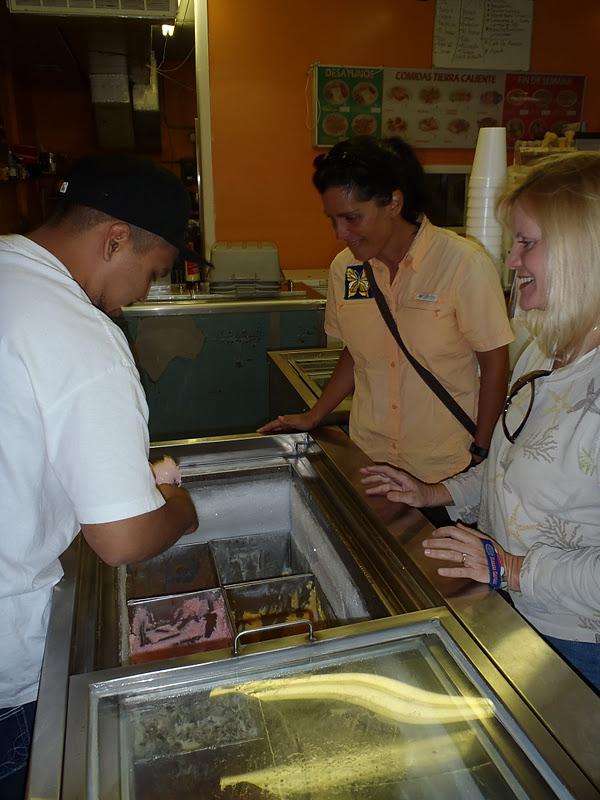
Nothing like ice cream to celebrate completing the Florida Master Naturalist Program!

Enjoying ice cream a Tierra Caliente Paleteria in Immokalee, FL